
CyberSN
Workforce Intelligence
Mutechs — Full Security Organization
Prepared for Priya Raman, CISO · June 2026

Cybersecurity and IT leaders are expected to make critical decisions every day. Those decisions require clear and ongoing visibility into capabilities, organizational maturity, workforce risk, talent dependencies, and the responsibilities required to execute strategy.

CyberSN provides that visibility.

We help leaders understand what capabilities they have, what capabilities they need, where risk exists, how talent should be developed and retained, and what investments are required to achieve business objectives.

Because even the best strategy cannot succeed if the capabilities required to execute it are missing, immature, or at risk.

Deidre Diamond
Founder & CEO, CyberSN
Engagement OverviewMutechs · June 2026
31
In-scope teammates
22 / 9
Permanent / Contractor
7
Teams
31
Interviews analyzed

Scope. The seven teams in scope — Security Leadership, Product Security, Cloud & Platform Security, Detection & Response, Identity & Access, Governance Risk & Compliance, and Security Engineering.

Data. CyberSN platform job descriptions for every position; interview transcripts; a workforce happiness survey (permanent staff); and the client’s security roadmap.

Method. Competency, ecosystem, structure, strategy-alignment, and risk analysis synthesized into prioritized recommendations and individual development plans.
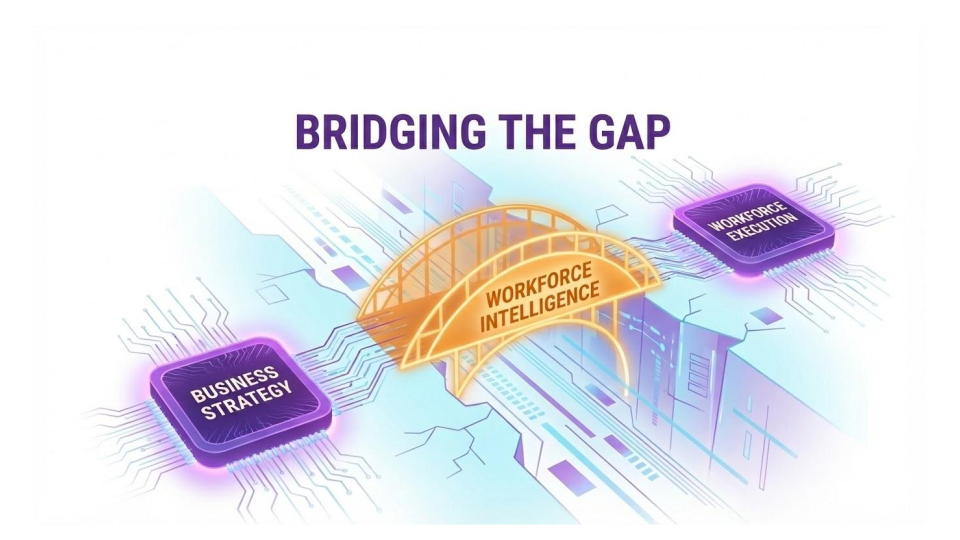
Workforce Intelligence Program

Beyond Headcounts and Titles
  • Ongoing Visibility — a live view of how FTEs, contractors, and MSPs work together.
  • Core Connections — linking who makes up the workforce with their capabilities.
  • Strategic Alignment — aligning responsibilities to business priorities.
  • Proactive Control — moving from firefighting to orchestrating talent.
Bridging the Gap

Executive Summary

From capability that lives in individuals to capability the organization owns

Executive Summary — The Strategic Through-LineMutechs · June 2026

Mutechs built a capable security organization at the speed the business grew, and it now has to make that organization operate by design. Across every team the same pattern holds: strong headline capability — cloud security, detection, identity, compliance — resting on a single owner or a single vendor, inside a structure assembled faster than its ownership could be defined. The capabilities the three-year roadmap needs are already present. What is missing is the operating model that makes them durable: clear ownership, backed-up single points of failure, and authority where today there is only influence.

The shift this workforce must make is from improvised to deliberate — from capability that happens to live in one person’s head to capability the organization owns, documents, and can execute regardless of who is in the room.

In summary: the capabilities exist; Mutechs must now own them by design rather than by individual heroics. The framing every later section reinforces.
Executive Summary — What We FoundMutechs · June 2026
Mutechs has the capabilities its roadmap needs, concentrated in too few people. The strongest capabilities — cloud security, detection, identity, and compliance — each rest on a single owner or a single vendor, so capability is real and continuity is fragile (REC-002, REC-003, REC-005).
The security organization grew faster than its structure. Ownership overlaps between product and central security, vulnerability management is split across three teams, and no governance cadence ties the work to the roadmap (REC-001, REC-009).
The retention asset is strong and unmanaged. Team culture rates 4.4 while company context and career structure lag; the overloaded key people are both the most critical and the most likely to leave (REC-013, REC-015).

What must happen first: the sequenced critical actions (REC-001, REC-002, REC-003).

Executive Summary — Security & the Business ObjectivesMutechs · June 2026
How to read thisMap each workforce finding to the metrics leadership already uses to run the business — speak their scorecard.
Business ObjectiveWorkforce SignalSupporting Actions
Net-new ARR & enterprise deal velocitySecurity review and questionnaire turnaround gate enterprise deals; a single Customer Trust analyst is the bottleneck.REC-011, REC-008
Audit readiness (SOC 2 / ISO 27001)The audit calendar rests on one overloaded owner; a single absence puts customer-trust commitments at risk.REC-008, REC-016
Platform availability & customer trustDetection and incident response — the controls that protect uptime and customer data — are concentrated in one detection engineer with informal command.REC-002, REC-004
Safe, fast growth through acquisitionUnintegrated acquisition stacks and nascent third-party risk turn each new deal into unmanaged exposure.REC-006, REC-012
Executive Summary — The Team Must Grow to Match the MissionMutechs · June 2026
Bottom lineMost of the expansion is self-funded — contractor-to-permanent swaps, automation savings, and codifying single-owner knowledge — rather than net-new budget.
FunctionTodayThe planHow it is funded
Detection & Response1 detection engineer + outsourced tier-12 detection engineers; detection-as-code; managed MDR SLAContractor-to-permanent swap (REC-002, REC-017)
Cloud & Platform Security1 staff engineer owns all guardrailsGuardrails as code plus a cross-trained backupNet-zero; codify + cross-train (REC-003, REC-013)
Identity & Access1 permanent + 3 vendor contractors; architect vacantIAM Architect + 1 contractor converted to permanentContractor-to-permanent + open req (REC-005, REC-017)
Governance, Risk & Compliance1 director owns audit + questionnairesAdd a GRC lead; automate evidence & questionnairesPhased case + automation ROI (REC-008, REC-011)

Capabilities Insights

How work and capability are distributed across the organization

How Capability Is Distributed — the Org-Wide PatternMutechs · June 2026
The frameAcross every team the pattern is the same: strong headline capability resting on one owner or one vendor.
MeasureValue
Single-owner critical capabilities6 (detection, cloud guardrails, identity architecture, audit calendar, VM program, Lumify integration)
Contractor share of the workforce9 of 31 teammates (29%), concentrated in Identity, Detection tier-1, and tooling
Teams with a single permanent owner of a core capability4 of 7
Capability is present across the organization and thin underneath the surface. The roadmap is executable once ownership is clarified and the single points of failure are backed up (REC-001, REC-013).
Capabilities — Security LeadershipMutechs · June 2026
Observations
Security program management is the leadership team’s center of gravity, at 65% of its time across both teammates. Strategy and coordination capacity exists at the top; the structure to operate it across the wider organization is the gap the operating-model priority addresses (REC-001).
Governance and architecture appear only as secondary allocations (25% and 10%). Leadership sets direction and depends on the teams below to hold deep governance and design capability, which concentrates execution in a few senior individual contributors.
Top Capabilities — Security Leadership
Project Management
35.0%
Leadership: Cyber Planning
30.0%
Compliance
25.0%
Architecture and Design
10.0%

2 teammates · % of total team time (holders × allocation ÷ headcount)

Capabilities — Product SecurityMutechs · June 2026
Observations
Application security is the team’s dominant capability at 54% of team time, held across all five teammates. Depth is real and well distributed; the constraint is authority, not skill — embedded engineers report into Engineering and the team can advise rather than require secure-design outcomes (REC-007).
DevSecOps and pipeline security account for 20% of team time across three teammates. The foundation for security gates in CI/CD exists and can scale once the SDLC mandate is chartered (P3).
Vulnerability management appears here at 6% of team time, one holder. The same capability surfaces in Cloud and Security Engineering with no single program owner, leaving remediation accountability split (REC-009).
Top Capabilities — Product Security
Application Security
54.0%
DevSecOps
20.0%
Leadership: Cyber Planning
8.0%
Architecture and Design
8.0%
Vulnerability Threat Management
6.0%
Penetration Testing
4.0%

5 teammates · % of total team time (holders × allocation ÷ headcount)

Capabilities — Cloud & Platform SecurityMutechs · June 2026
Observations
Cloud security is the strongest single capability in the organization at 60% of team time, held by all five teammates. The capability is deep; its governing layer is fragile.
Infrastructure-as-code guardrails sit at just 6% of team time with a single holder. One staff engineer owns the guardrail and posture stack for the entire multi-tenant estate — a single point of failure that REC-003 and REC-013 convert to a documented, backed-up capability.
Identity work appears inside this team at 8% of team time, one holder. That allocation is the unmerged Lumify directory, maintained informally by one ex-acquisition engineer outside core SSO (REC-006).
Top Capabilities — Cloud & Platform Security
Cloud Security Engineering
60.0%
Leadership: Cyber Planning
8.0%
Architecture and Design
8.0%
Identity and Access Management (IAM)
8.0%
DevSecOps
6.0%
Vulnerability Threat Management
6.0%
Security Engineering
4.0%

5 teammates · % of total team time (holders × allocation ÷ headcount)

Capabilities — Detection & ResponseMutechs · June 2026
Observations
Security operations consume 68% of team time, and half of that capacity is outsourced tier-1. Three of six teammates are Northbeam MDR contractors; monitoring quality is governed by a vendor relationship whose SLA is not yet matured (REC-010).
Detection engineering is 11.7% of team time, held by one teammate. Nearly every platform detection is authored by a single engineer; the capability stops scaling, and degrades, the moment that one person is unavailable (REC-002, REC-014).
Incident response sits at 16.7% across two teammates, with no formalized command. Command authority is held informally by the manager, which slows containment under a real multi-tenant incident (REC-004).
Top Capabilities — Detection & Response
Security Operations
68.3%
Incident Response
16.7%
Security Analysis
11.7%
Leadership: Cyber Planning
3.3%

6 teammates · % of total team time (holders × allocation ÷ headcount)

Capabilities — Identity & AccessMutechs · June 2026
Observations
Identity and access is 70% of team time, and three of the four holders are Keystone contractors. The control plane for every system is delivered almost entirely by a single vendor (REC-005, REC-017).
Architecture capability in identity (7.5% of team time) sits with a contractor. The de facto identity architect is not a permanent teammate, and the IAM Architect seat is vacant — durable ownership is the gap (REC-005).
Only one permanent teammate carries any identity allocation. A contractor departure or vendor change would leave the platform without anyone permanent who understands its identity fabric.
Top Capabilities — Identity & Access
Identity and Access Management (IAM)
70.0%
Leadership: Cyber Planning
10.0%
Architecture and Design
7.5%
Compliance
7.5%
Security Engineering
5.0%

4 teammates · % of total team time (holders × allocation ÷ headcount)

Capabilities — GRCMutechs · June 2026
Observations
Governance, risk, and compliance is 52% of team time across all five teammates. The bench is broad; the concentration is in ownership, not coverage — the audit calendar and customer-trust pipeline rest on a single director (REC-008).
Third-party risk is 26% of team time, concentrated in one analyst. The program is nascent even as the organization depends on three security vendors and integrates acquisitions (REC-012).
Data protection and privacy appear at 16% of team time across two teammates. Privacy capability exists and is thin enough that ISO 27001 and growing customer commitments will stretch it without added depth (REC-008).
Top Capabilities — GRC
Compliance
52.0%
Risk
26.0%
Privacy Analysis
16.0%
Leadership: Cyber Planning
6.0%

5 teammates · % of total team time (holders × allocation ÷ headcount)

Capabilities — Security EngineeringMutechs · June 2026
Observations
Vulnerability management is half of this team’s time, the organization’s center for remediation engineering. The capability is strong here and spreads into Cloud and Product Security with no cross-team authority — coverage without consolidated accountability (REC-009).
Security tooling and automation account for 32.5% of team time across three teammates. Automation capacity exists to scale detection, evidence collection, and questionnaire response (REC-011, REC-014, REC-016).
One of four teammates is an Arclight contractor. Tooling continuity depends in part on contracted capacity — a dependency to convert toward permanent ownership over time (REC-017).
Top Capabilities — Security Engineering
Vulnerability Threat Management
50.0%
Security Engineering
32.5%
Leadership: Cyber Planning
10.0%
Cloud Security Engineering
7.5%

4 teammates · % of total team time (holders × allocation ÷ headcount)

Strategy Alignment

Workforce capability mapped to the 3-Year Security Roadmap

The 3-Year Security RoadmapMutechs · June 2026
ContextMutechs’s multi-year security roadmap defines its priorities. The alignment assessment that follows rates today’s workforce against each; it does not restate the roadmap’s own action items.
Roadmap PriorityObjective
P1 Mature the Security Operating Model & Clarify OwnershipMake the security organization operate by design — clear ownership, decision rights, and a governance cadence — rather than by improvisation.
P2 Scale Detection & Response for Multi-Tenant CloudBuild detection and response that scales with the multi-tenant platform and survives the absence of any one engineer.
P3 Embed Security into the SDLC at ScaleMake security a property of how software is built — present in every squad and enforced in the pipeline.
P4 Strengthen Cloud & Platform Security GuardrailsGovern cloud risk through guardrails as code and posture management that no longer depend on a single owner.
P5 Unify Identity Across Core & Acquired StacksGive identity — the control plane for every system — durable, permanent ownership across the core and acquired stacks.
P6 Scale GRC for SOC 2 / ISO 27001 & Customer TrustScale governance and compliance so audit readiness and customer trust are a repeatable program, not one person’s calendar.
P7 Stand Up Third-Party & Supply-Chain Risk GovernanceKnow and govern the risk that vendors and acquisitions bring before it enters the platform.
Roadmap Alignment SummaryMutechs · June 2026
AlignmentHow aligned to the business the team is on this priority.
Execution ReadinessHow ready the people (workforce), process, technology, and metrics are to execute it — the four columns at right break that down.
People (Workforce)Rated by coverage: over-covered, covered, low coverage or no coverage.
StrongMediumLow
PriorityAlignmentExecution ReadinessPeople
(Workforce)
ProcessTechnologyMetrics
P1 Mature the Security Operating Model & Clarify OwnershipPartialLowOver-coveredLowMediumLow
P2 Scale Detection & Response for Multi-Tenant CloudMisalignedLowLow coverageMediumMediumLow
P3 Embed Security into the SDLC at ScalePartialLowCoveredLowMediumLow
P4 Strengthen Cloud & Platform Security GuardrailsPartialLowLow coverageMediumStrongMedium
P5 Unify Identity Across Core & Acquired StacksMisalignedLowLow coverageMediumMediumLow
P6 Scale GRC for SOC 2 / ISO 27001 & Customer TrustPartialLowLow coverageMediumLowMedium
P7 Stand Up Third-Party & Supply-Chain Risk GovernanceMisalignedMediumLow coverageLowLowLow
0fully aligned4partially supported3not yet supported

Bottom line. The strategy is well-targeted, and the workforce already holds real strength where it counts — application-security depth (P3) is covered, and cloud-security capability (P4) rates Strong. The binding constraint is ownership and structure: across most priorities the capabilities exist and rest on single owners and a single identity vendor. Where the talent is genuinely deep, the gap is authority, not skill. The recommendations that follow back up those owners and define the ownership the roadmap assumes (REC-001, REC-013).

Mature the Security Operating Model & Clarify OwnershipMutechs · June 2026
Roadmap objective. Make the security organization operate by design — clear ownership, decision rights, and a governance cadence — rather than by improvisation.
Program-management capability exists in leadership, and the structure to operate it does not. Ownership overlaps between product and central security, vulnerability management is split across three teams, and there is no RACI or governance cadence. This is the foundational priority: every other objective depends on clear ownership.
What’s driving the rating
People (Workforce) — Over-coveredProgram-management capability sits with the CISO and Security Program Manager — 65% of leadership time — but the governance cadence has no chartered owner and vulnerability-management accountability is split across three teams.
Process — LowNo published RACI or decision-rights model and no standing governance cadence link the seven teams to the roadmap; ownership of shared work overlaps between product and central security.
Technology — MediumProgram tooling is in place (Jira, Confluence, Smartsheet), but no operating model or RACI is codified in it — the structure lives on paper, not in a system of record.
Metrics — LowNothing ties metrics to ownership or a governance cadence; the only signal today is a company-culture survey score of 3.3 driven by unclear ownership and shifting priorities.

Workforce Alignment by Dimension

Alignment to People (Workforce)Medium
Alignment to ProcessLow
Alignment to TechnologyMedium
Alignment to MetricsLow
Scale Detection & Response for Multi-Tenant CloudMutechs · June 2026
Roadmap objective. Build detection and response that scales with the multi-tenant platform and survives the absence of any one engineer.
All detection engineering rests on one teammate, incident command is informal, and tier-1 is fully outsourced to the MDR vendor. The capability is real and entirely concentrated; this priority is the most exposed in the roadmap and the least redundant in the workforce.
What’s driving the rating
People (Workforce) — Low coverageDetection engineering — 11.7% of team time — rests on a single engineer with no peer or backup, and three of the six-person team are outsourced Northbeam tier-1 analysts; this is the least redundant capability in the workforce.
Process — MediumIncident command is held informally by the manager with no documented severities or escalation authority, and the Northbeam MDR SLA, coverage hours, and tier-1/tier-2 hand-off are not yet formalized.
Technology — MediumThe detection toolchain is real (Splunk, Sigma, Panther, CrowdStrike, Tines), but the detection-as-code pipeline is early, with no coverage map across cloud and identity telemetry and no automated validation of detection efficacy.
Metrics — LowNo detection-coverage, MTTD/MTTR, or incident metrics are instrumented, so blind spots in cloud and identity telemetry — the likeliest attack surface for a multi-tenant SaaS platform — go unmeasured.

Workforce Alignment by Dimension

Alignment to People (Workforce)Low
Alignment to ProcessMedium
Alignment to TechnologyMedium
Alignment to MetricsLow
Embed Security into the SDLC at ScaleMutechs · June 2026
Roadmap objective. Make security a property of how software is built — present in every squad and enforced in the pipeline.
Application-security depth is strong — over half of Product Security team time — and the central team cannot require secure-design outcomes because embedded engineers report into Engineering. The capability is present; the authority to apply it consistently is missing.
What’s driving the rating
People (Workforce) — CoveredApplication-security depth is genuine and well-distributed — 54% of Product Security time across all five engineers — making this the most capable team relative to its priority; the constraint is authority, not skill.
Process — LowEmbedded product-security engineers report into Engineering with only a dotted line to security, so no chartered authority gates the SDLC and secure design is advised, not required.
Technology — MediumThe pipeline foundation exists (Snyk, Semgrep, Burp, GitHub Actions, OPA) and DevSecOps is 20% of team time, but security gates in CI/CD are advisory rather than enforced.
Metrics — LowNo secure-design or gate-coverage metrics are tracked, so consistency of secure-by-design outcomes across squads cannot be measured as engineering scales.

Workforce Alignment by Dimension

Alignment to People (Workforce)Strong
Alignment to ProcessLow
Alignment to TechnologyMedium
Alignment to MetricsLow
Strengthen Cloud & Platform Security GuardrailsMutechs · June 2026
Roadmap objective. Govern cloud risk through guardrails as code and posture management that no longer depend on a single owner.
Cloud security is the strongest single capability in the organization at roughly 60% of team time, and the guardrail and posture stack that governs the whole estate is owned by one staff engineer with no backup, while the acquired Lumify estate sits outside it. Strong capability, fragile ownership.
What’s driving the rating
People (Workforce) — Low coverageThe infrastructure-as-code guardrail and posture stack for the whole multi-tenant estate is owned by one staff engineer with no documented backup, even though cloud security overall is the org's deepest capability at 60% of team time.
Process — MediumThere are no runbooks or secondary owner for CSPM and guardrail policy, and the acquired Lumify cloud estate is maintained informally outside the core guardrails with no integration plan of record.
Technology — StrongCloud tooling is strong and broadly held — AWS, Terraform, Wiz, Kubernetes, OPA, Snyk — with secure baselines defined as code; the platform capability is real, its governing layer is the fragile part.
Metrics — MediumPosture management produces some signal, but there are no dedicated cloud-posture KPIs or coverage reporting spanning the core and acquired estates.

Workforce Alignment by Dimension

Alignment to People (Workforce)Low
Alignment to ProcessMedium
Alignment to TechnologyStrong
Alignment to MetricsMedium
Unify Identity Across Core & Acquired StacksMutechs · June 2026
Roadmap objective. Give identity — the control plane for every system — durable, permanent ownership across the core and acquired stacks.
Identity, the control plane for every system, has one permanent owner, a fully contracted engineering bench, a vacant architect seat, and an unmerged acquired directory. The capability is delivered almost entirely by a single vendor; permanent ownership is the gap.
What’s driving the rating
People (Workforce) — Low coverageThree of the four-person identity team are Keystone contractors, the de facto identity architect is a contractor, the IAM Architect seat is vacant, and only one permanent teammate carries any identity allocation.
Process — MediumEighteen months after the Lumify acquisition its identity directory remains unmerged with no documented integration plan, and the core SSO platform is operated by a contractor acting as de facto lead.
Technology — MediumThe identity stack is capable (Okta, Active Directory, SailPoint), but a separate Lumify directory still sits outside core SSO, so the control plane spans two unmerged systems.
Metrics — LowNo access-review, lifecycle, or MFA-enforcement metrics are in place; the only visible risk signal is the concentration of identity knowledge in a single vendor.

Workforce Alignment by Dimension

Alignment to People (Workforce)Low
Alignment to ProcessMedium
Alignment to TechnologyMedium
Alignment to MetricsLow
Scale GRC for SOC 2 / ISO 27001 & Customer TrustMutechs · June 2026
Roadmap objective. Scale governance and compliance so audit readiness and customer trust are a repeatable program, not one person’s calendar.
GRC capability is broad across the bench, and the audit calendar and customer-trust pipeline concentrate on a single overloaded director with manual evidence collection. Customer-questionnaire turnaround is already a deal bottleneck. Distribution and automation are the constraints, not capability.
What’s driving the rating
People (Workforce) — Low coverageThe SOC 2 / ISO 27001 audit calendar and the customer-questionnaire pipeline rest on a single director against a thin analyst bench, with customer-trust responses owned by one analyst.
Process — MediumControl-evidence collection is manual and there is no answer library or trust-portal workflow, so questionnaire turnaround lengthens as deal volume grows and constrains enterprise sales velocity.
Technology — LowVanta and Drata are in place but used manually; there is no automated control-evidence collection and no questionnaire-automation platform.
Metrics — MediumAudit readiness is tracked informally through questionnaire turnaround, with no defined KPI set across audit readiness, evidence freshness, or response time.

Workforce Alignment by Dimension

Alignment to People (Workforce)Low
Alignment to ProcessMedium
Alignment to TechnologyLow
Alignment to MetricsMedium
Stand Up Third-Party & Supply-Chain Risk GovernanceMutechs · June 2026
Roadmap objective. Know and govern the risk that vendors and acquisitions bring before it enters the platform.
Third-party risk is a single-analyst effort while the organization depends on three security vendors and integrates acquired companies. There is no tiering, workflow, or pre-integration review. The capability exists in one person; the program does not yet exist.
What’s driving the rating
People (Workforce) — Low coverageThird-party risk — 26% of GRC time — is a single-analyst effort even as Mutechs depends on three security vendors (Northbeam, Arclight, Keystone) and integrates acquired companies.
Process — LowThere is no vendor tiering, no risk-based assessment workflow, and no mandatory pre-integration security review for vendors or acquisitions.
Technology — LowOneTrust and Whistic are available but barely used; no systematic assessment or vendor-risk workflow runs on them.
Metrics — LowNo vendor SLA-compliance, assessment-completion, or remediation metrics exist, so vendor and acquisition risk enters the platform unmeasured.

Workforce Alignment by Dimension

Alignment to People (Workforce)Low
Alignment to ProcessLow
Alignment to TechnologyLow
Alignment to MetricsLow

Recommendations

Prioritized, sequenced, tied to risk — and built to pass the funding gate every position must clear

Recommendations Summary (1/2)Mutechs · June 2026
StatusGreen (completed) and yellow (in progress) mark work the CISO advanced during the engagement — items that were not green when CyberSN began. Priority and Horizon describe the recommendation; Status describes progress.
IDRecommendationPriorityHorizonStatus
REC-001Define the security operating model and ownershipCriticalNow (0-3 mo)In progress
REC-002Build internal detection-engineering depthCriticalNow (0-3 mo)In progress
REC-003Codify and back up cloud guardrails and postureCriticalNow (0-3 mo)—
REC-004Formalize incident command and on-callHighNear (3-6 mo)—
REC-005Hire an IAM Architect and seat permanent identity ownershipHighNear (3-6 mo)—
REC-006Integrate the acquired Lumify stackHighMid (6-12 mo)—
REC-007Resolve the product-security reporting seamHighNear (3-6 mo)—
REC-008Add GRC capacity and distribute the audit calendarHighMid (6-12 mo)—
REC-010Mature the MDR SLA and tier hand-offHighNear (3-6 mo)—
Recommendations Summary (2/2)Mutechs · June 2026
IDRecommendationPriorityHorizonStatus
REC-017Convert contractor spend to senior permanent hiresHighMid (6-12 mo)—
REC-009Charter a single vulnerability-management program ownerMediumNear (3-6 mo)—
REC-011Automate customer-questionnaire responseMediumNear (3-6 mo)—
REC-012Stand up the third-party risk programMediumMid (6-12 mo)—
REC-013Run a cross-training and knowledge-continuity programMediumMid (6-12 mo)—
REC-014Expand detection-as-code and cloud-native coverageMediumMid (6-12 mo)—
REC-015Build a career-development and retention frameworkMediumMid (6-12 mo)—
REC-016Establish security metrics and reportingMediumMid (6-12 mo)—

Detailed Recommendations

REC-001 — Define the security operating model and ownershipMutechs · June 2026
Critical Now (0-3 mo) Governance In progress

Publish a security operating model: a RACI for product vs. central security, decision rights for shared capabilities (vulnerability management, product security), and a standing governance cadence that ties teams to the roadmap. Resolve overlapping ownership created during rapid growth.

Why this matters: Effort is duplicated, gaps go unowned, and the roadmap cannot be executed predictably because accountability is unclear.
Expected impact: Every shared capability has one accountable owner and a forum to manage it; the roadmap becomes executable because accountability is explicit.
PriorityCritical
HorizonNow (0-3 mo)
EffortMedium
TypeGovernance
SupportsP1 Operating Model
REC-002 — Build internal detection-engineering depthMutechs · June 2026
Critical Now (0-3 mo) Hiring In progress

Add a second detection engineer and adopt detection-as-code so coverage is no longer carried by one person. Establish peer review for detections and a coverage map across cloud and identity telemetry to remove the single-owner concentration.

Why this matters: If the sole detection engineer is unavailable, detection coverage stops improving and degrades as the platform changes, leaving multi-tenant threats undetected and incident response blind.
Expected impact: Detection coverage survives the absence of any one engineer and scales with the multi-tenant platform.
PriorityCritical
HorizonNow (0-3 mo)
EffortHigh
TypeHiring
SupportsP2 Detection & Response
REC-003 — Codify and back up cloud guardrails and postureMutechs · June 2026
Critical Now (0-3 mo) Reduce Risk

Document the IaC guardrail and CSPM stack as code and runbooks, cross-train a second engineer, and remove the single point of failure governing cloud risk for the whole estate. Bring the acquired Lumify cloud organization under the same guardrails.

Why this matters: A single point of failure governs cloud risk for the whole platform; loss or absence of this teammate stalls guardrail enforcement and posture remediation across every tenant.
Expected impact: Cloud guardrail enforcement and posture remediation continue regardless of any single engineer's availability.
PriorityCritical
HorizonNow (0-3 mo)
EffortMedium
TypeReduce Risk
SupportsP4 Cloud & Platform Guardrails
REC-004 — Formalize incident command and on-callMutechs · June 2026
High Near (3-6 mo) Governance

Charter an incident-command structure with defined severities, roles, and escalation authority; publish runbooks; and run quarterly tabletop exercises. Define the on-call rotation across the permanent core and the MDR vendor.

Why this matters: Under a real multi-tenant incident, unclear command slows containment and decision-making, increasing customer impact and breach-notification exposure.
Expected impact: Incidents are commanded with clear authority, cutting containment time and reducing customer and notification exposure.
PriorityHigh
HorizonNear (3-6 mo)
EffortMedium
TypeGovernance
SupportsP2 Detection & Response
REC-005 — Hire an IAM Architect and seat permanent identity ownershipMutechs · June 2026
High Near (3-6 mo) Hiring

Fill the vacant IAM Architect position and convert one Keystone contractor to permanent, so the identity control plane has permanent engineering ownership. Reduce single-vendor dependency while retaining Keystone for surge delivery.

Why this matters: Identity, the control plane for every system, has no permanent engineering ownership; a vendor change or contractor departure would leave the platform without anyone who understands its identity fabric.
Expected impact: Identity has durable in-house ownership; the platform no longer depends on a single contractor to understand its identity fabric.
PriorityHigh
HorizonNear (3-6 mo)
EffortHigh
TypeHiring
SupportsP5 Unify Identity
REC-006 — Integrate the acquired Lumify stackMutechs · June 2026
High Mid (6-12 mo) Reduce Risk

Merge the Lumify identity directory into the core SSO, bring its cloud organization under core guardrails, and assign an owner of record for the integration. Eliminate the parallel, informally owned stack.

Why this matters: Duplicate, unmonitored controls and a parallel identity directory create coverage seams an attacker can exploit, and concentrate acquisition knowledge in one informal owner.
Expected impact: Coverage seams from the acquisition close; controls and identity consolidate under one monitored model.
PriorityHigh
HorizonMid (6-12 mo)
EffortHigh
TypeReduce Risk
SupportsP4 Cloud & Platform Guardrails, P5 Unify Identity
REC-007 — Resolve the product-security reporting seamMutechs · June 2026
High Near (3-6 mo) Governance

Give central Product Security chartered authority over secure-design outcomes: either a solid line to embedded engineers or a chartered security-champion model with defined gates in the SDLC. Make secure-by-design a requirement, not advice.

Why this matters: Security decisions are made after design, not within it; secure-by-design erodes as engineering scales and the central team cannot enforce consistent standards.
Expected impact: Security is built into design rather than reviewed after it; standards apply consistently as engineering scales.
PriorityHigh
HorizonNear (3-6 mo)
EffortMedium
TypeGovernance
SupportsP3 Embed Security in the SDLC
REC-008 — Add GRC capacity and distribute the audit calendarMutechs · June 2026
High Mid (6-12 mo) Hiring

Build a GRC lead or deputy to share the SOC 2 / ISO 27001 audit calendar and customer-trust commitments, de-risking the single overloaded owner. Distribute ownership across audit, privacy, and third-party risk.

Why this matters: A single absence or departure jeopardizes audit timelines and customer-trust commitments that gate enterprise revenue.
Expected impact: Audit timelines and customer-trust commitments survive any single absence and scale with revenue.
PriorityHigh
HorizonMid (6-12 mo)
EffortMedium
TypeHiring
SupportsP6 Scale GRC
REC-010 — Mature the MDR SLA and tier hand-offMutechs · June 2026
High Near (3-6 mo) Governance

Formalize the Northbeam MDR SLA, coverage hours, and tier-1/tier-2 escalation hand-off, with defined internal escalation. Manage the vendor relationship that governs monitoring quality as a measured service.

Why this matters: Monitoring quality is governed by an unmanaged vendor relationship; gaps in coverage and hand-off allow incidents to be missed or escalated late.
Expected impact: Monitoring quality becomes managed and measurable; coverage and hand-off gaps close.
PriorityHigh
HorizonNear (3-6 mo)
EffortMedium
TypeGovernance
SupportsP2 Detection & Response, P7 Third-Party Risk
REC-017 — Convert contractor spend to senior permanent hiresMutechs · June 2026
High Mid (6-12 mo) Hiring

Redirect existing contractor spend in Detection, Cloud, and Identity toward permanent senior hires that reduce key-person and single-vendor concentration. A net-zero swap that buys durable ownership rather than augmented capacity.

Why this matters: If the sole detection engineer is unavailable, detection coverage stops improving and degrades as the platform changes, leaving multi-tenant threats undetected and incident response blind.
Expected impact: Concentration and vendor reliance fall without net-new budget; capacity converts into in-house ownership.
PriorityHigh
HorizonMid (6-12 mo)
EffortHigh
TypeHiring
SupportsP2 Detection & Response, P4 Cloud & Platform Guardrails, P5 Unify Identity
REC-009 — Charter a single vulnerability-management program ownerMutechs · June 2026
Medium Near (3-6 mo) Governance

Name one vulnerability-management program owner with cross-team authority over remediation SLAs, aging, and KPIs spanning Security Engineering, Cloud, and Product Security. Keep the distributed coverage; add the missing accountability.

Why this matters: Vulnerabilities fall between teams; no one is accountable for platform-wide remediation, aging, or KPIs, leaving exploitable gaps unmanaged.
Expected impact: Platform-wide remediation has one accountable owner and consolidated metrics; vulnerabilities stop falling between teams.
PriorityMedium
HorizonNear (3-6 mo)
EffortLow
TypeGovernance
SupportsP1 Operating Model, P3 Embed Security in the SDLC
REC-011 — Automate customer-questionnaire responseMutechs · June 2026
Medium Near (3-6 mo) Automation

Stand up an answer library and trust portal so customer security questionnaires are answered from curated, reusable content. Cut turnaround time and free the Customer Trust analyst from repetitive responses.

Why this matters: Security review becomes a drag on enterprise deal velocity, directly affecting net-new revenue.
Expected impact: Security review stops dragging enterprise deal velocity; questionnaire turnaround drops materially.
PriorityMedium
HorizonNear (3-6 mo)
EffortLow
TypeAutomation
SupportsP6 Scale GRC
REC-012 — Stand up the third-party risk programMutechs · June 2026
Medium Mid (6-12 mo) Governance

Build vendor tiering, a risk-based assessment workflow, and a mandatory pre-integration security review for acquisitions and new vendors. Cover the three security vendors first.

Why this matters: Vendor and acquisition risk enters the platform unassessed; the next integration repeats the Lumify integration debt.
Expected impact: Vendor and acquisition risk is assessed before it enters the platform; the next integration avoids repeating the Lumify debt.
PriorityMedium
HorizonMid (6-12 mo)
EffortMedium
TypeGovernance
SupportsP7 Third-Party Risk
REC-013 — Run a cross-training and knowledge-continuity programMutechs · June 2026
Medium Mid (6-12 mo) Training

Establish documented backups for every single-owner capability — detection engineering, cloud guardrails, identity, and the audit calendar — with runbooks, shadowing, and rotation. Convert tacit knowledge into shared knowledge.

Why this matters: If the sole detection engineer is unavailable, detection coverage stops improving and degrades as the platform changes, leaving multi-tenant threats undetected and incident response blind.
Expected impact: Single points of failure across the organization gain a documented second owner.
PriorityMedium
HorizonMid (6-12 mo)
EffortMedium
TypeTraining
SupportsP1 Operating Model
REC-014 — Expand detection-as-code and cloud-native coverageMutechs · June 2026
Medium Mid (6-12 mo) Automation

Mature the detection-as-code pipeline, build a coverage map across cloud and identity telemetry, and add automated detection validation. Scale detection efficacy beyond what one engineer can hand-build.

Why this matters: Blind spots persist in cloud and identity telemetry, the most likely attack surface for a multi-tenant SaaS platform.
Expected impact: Cloud and identity blind spots shrink; detection scales as code rather than as individual effort.
PriorityMedium
HorizonMid (6-12 mo)
EffortMedium
TypeAutomation
SupportsP2 Detection & Response, P4 Cloud & Platform Guardrails
REC-015 — Build a career-development and retention frameworkMutechs · June 2026
Medium Mid (6-12 mo) Governance

Give every teammate a documented career plan and growth path, starting with the overloaded single-owners. Protect the team-culture retention asset by pairing it with development structure and load relief.

Why this matters: Overloaded key people with no development path are the most likely to leave, converting a retention strength into the organization's largest continuity risk.
Expected impact: The retention strength is protected; overloaded key people gain a path and a reason to stay.
PriorityMedium
HorizonMid (6-12 mo)
EffortLow
TypeGovernance
SupportsP1 Operating Model
REC-016 — Establish security metrics and reportingMutechs · June 2026
Medium Mid (6-12 mo) Governance

Define and report a small set of KPIs across detection coverage, vulnerability aging/MTTR, audit readiness, and questionnaire turnaround. Tie them to the governance cadence so progress is visible to leadership.

Why this matters: Effort is duplicated, gaps go unowned, and the roadmap cannot be executed predictably because accountability is unclear.
Expected impact: Leadership can see and steer execution; the program is managed by evidence, not anecdote.
PriorityMedium
HorizonMid (6-12 mo)
EffortMedium
TypeGovernance
SupportsP1 Operating Model, P6 Scale GRC

Funding the Plan

Every recommendation paired with its path through the funding gate

Funding the PlanMutechs · June 2026
The gateEvery new position at Mutechs clears a funding gate: the CISO and Finance approve against a net-zero or revenue-linked case. This page pairs each critical and high recommendation with the path it takes through that gate, so the approval memo for any single move is effectively pre-drafted here.
RecommendationFunding pathMechanism
REC-001 — Define the operating modelExisting leadership timeReprioritized program-management capacity; no net-new budget.
REC-002, REC-017 — Detection depth & contractor conversionContractor-to-permanent swapRedirect existing Detection and tooling contractor spend toward a permanent detection engineer.
REC-003, REC-013 — Codify & back up guardrailsNet-zero / automation ROIDocumentation and cross-training absorbed in-team; guardrails-as-code reduces ongoing manual effort.
REC-005 — IAM Architect & permanent identity ownershipContractor-to-permanent + open reqConvert one Keystone contractor and fill the vacant architect seat; identity spend largely re-baselined.
REC-006 — Integrate the Lumify stackSOW-scopedTime-boxed integration project; consolidates duplicate cloud and identity spend on completion.
REC-007 — Resolve the product-security seamNo net-new budgetA reporting-line and charter change — an organizational decision, not a hire.
REC-008 — GRC capacity & audit distributionPhased business caseA single GRC lead hire justified by enterprise revenue gated on audit readiness.
REC-010 — Mature the MDR SLAVendor-fundedRenegotiated within the existing Northbeam contract; coverage and hand-off defined at no added cost.

Sustaining the Program with CyberSN

The Workforce Intelligence Managed Service keeps this assessment live — with Talent Solutions to execute the plan

The Workforce Intelligence Managed ServiceMutechs · June 2026
Keep this assessment liveCyberSN’s flagship — an ongoing managed service

This report is a point-in-time snapshot. The Managed Service turns it into an ongoing program — dedicated SME advisement, continuously maintained workforce data, and a fixed executive cadence — so the gaps identified here stay tracked, owned, and closed as roles fill and the roadmap advances, and the capability chart this report is built on stays decision-grade between updates.

Workforce Intelligence
Maintains the live ecosystem view — data hygiene, RAG dashboards, and structured leadership reporting.
IT & Cyber SME
Aligns workforce insight to your cyber-risk priorities and prioritizes the next initiatives.
Workforce SME
Role clarity, training & competency planning, burnout reduction, and load balancing.
Continuous data & risk monitoring  ·  Monthly manager/director touchpoints  ·  Quarterly executive reviews  ·  Annual maturity assessment
Organizational clarityRisk reductionData integrityStrategic prioritizationMaintained risk register
Plus Talent Solutions to execute the plan
Talent MatchingA capability-mapped candidate network behind your internal recruiters — faster time-to-qualified for the Year-1 roles: detection engineer, IAM Architect, GRC lead.REC-002 · 005 · 008
Contract StaffingInterim incident command and knowledge-transfer surge while permanent hires close and single-owner capabilities are backed up.REC-004 · 013
Statement of WorkScoped builds without permanent headcount — Lumify stack integration, detection-as-code, MDR SLA maturation, third-party risk program.REC-006 · 010 · 012 · 014
Workforce AdvisoryIndividual career & training plans for the overloaded key people, and a role-clarity and leveling assessment.REC-015
CyberSN
Thank you
CyberSN · Confidential — for Mutechs CISO use